


China Basics

Chinese New Year
The Chinese New Year holiday is almost upon us, which means that millions of Chinese migrant laborers will be heading home to see their families and companies manufacturing in China will be leaning on their suppliers to ship as much as possible before the Chinese New Year shutdown.
Our clients often have a lot of questions about how to best prepare for the Chinese New Year holidays. Admittedly for newcomers to China, working around the Chinese New Year holiday can be quite daunting. Although the actual holiday itself is merely three days long, the Chinese government moves adjacent weekend days into working days, creating a contiguous seven day holiday.

Stop and Have a Hamburger
Living in Asia and spending most of my time on the mainland of China leaves me missing so many of things that we take for granted in other areas of the world. Western food is, of course, one of those things that is just hard to find outside of large cities. A few weeks ago, I found myself criss-crossing Shanghai with several colleagues, looking for a sample of a hard to find electronic component. After a few fruitless hours of searching the various markets, I suggested to everyone that we take a break for lunch; this request for a lunch break happened to occur while in close proximity to one of the better hamburger spots in Shanghai, Kabb Grill. (It’s no Hodad’s Hamburger, our favorite from back home in San Diego, but hey you take what you can get around here!)

It Takes a Village to Raise a Factory
These days there is a great deal of debate raging around the topic of manufacturing, with many former and aspiring manufacturing centers looking to attract factory investment from the worlds multinational corporations.
At this very moment I am in a hotel in Bangkok, which is seemingly the only place in town where one can escape the barrage of stakeholders extolling the advantages of opening a factory in Thailand. Their reasoning is not unfounded, and it does not take much looking around to see the fertile ground where upon the next global manufacturing powerhouse may arise.

Scotch on the rocks: The importance of context in outsourced manufacturing
In the movie Who Framed Roger Rabbit, we witness our protagonist, Eddie Valiant, order a “scotch on the rocks” from a cartoon waiter and we laugh when the waiter returns with a glass that contains scotch and, literally, rocks.
This humorous aside illustrates a very important lesson about conducting business in foreign lands: The context of the conversation matters just as much as, if not more than, the subject matter.

Lessons Learned in International Sourcing
I still remember my first international fixture sourcing trip. Way back in 2005, I traveled with the founder of my previous employer (a fixture manufacturer) to China to explore our asian sourcing options. I remember it well because it left an impression on me that I will never forget. In a few weeks of being on the ground, and visiting suppliers, I left knowing that we had seen the future; this is where manufacturing was gravitating now, and it was only going to accelerate in the future. I also remember how “in over my head” I felt when trying to conduct business in a place where I knew almost nothing of the language, culture, or expectations. Read more 
What a difference a year makes
The theme for this year at south by southwest conference is “What a difference a year makes”. I found this to be true in my own experience of the conference, and many of my fellow attendees made similar comments about the evolution of the conference in general. As in my past year of attendance, my head is full of inspired writing that I am busily getting down onto paper. So, consider this the first in a series of posts. Read more
Retail Design, New York City Tourism, and New Beginnings
My wife and I just returned from a trip to New York to visit with my family, and while there we managed to spend one of our days in New York City, where I grew up.
(my family just recently realized that I have nearly reached the point where I have not lived in New York for as long as I lived in New York, and they took this opportunity to remind me of this newly discovered fact several times. Thanks mom!)
We had a chance to have dinner with some friends, who asked my wife what quintessential “New York Things” had I taken her to see. She quickly responded by recounting our first trip to New York, which we spent riding the subway and visiting every Best Buy in Manhattan, along with a few other smaller retailers. In hindsight, probably not the best first impression that I could have provided, however, it serves as a great metaphor for the motivations that drive me as a retail design thinker. I am passionate about what I do. A little too much at times.
I started my career in manufacturing, designing and building merchandising solutions, Read more
South By Southwest Wrap Up
This past week I had the opportunity to travel to the South By Southwest conference, and now that I’ve had a chance to digest everything (well, mostly), I’d like to summarize my impressions here.
Overall, attending South By Southwest was one of the most amazing experiences that I have ever had; not because of the panels or events, but because it really helped me look introspectively at what I want out of my life and career. I came back from the conference more focused and energized than I have been in a long time.
Focus
During the five day conference, there were over 300 panels, speeches, round-tables, and workshops. At any given time slot, I had a dozen or more panels that I needed to choose from. At first, I started sitting in the back of the room so I could panel-hop, but I quickly realized that my best course of action would be to choose one or two subject matter and focus on the panels that would fit in best with those subjects. I choose to focus on the two subjects that I am most passionate about, Open Source and Entrepreneurship.
At first, I simply looked at these two topics as just that; two different topics that I have an interest in learning more about. As time went on, I soon realized that there is significant overlap. From a very over-simplified perspective, Open Source is based on the premise that by sharing information freely serves to benefit everyone.
As a student of global entrepreneurship, I am driven to empower entrepreneurs to bring their ideas to reality. Never before have I been in a place where so many people have so many great ideas that have the potential to change the world. In consulting with early stage entrepreneurs, I started to see that the guiding principles of Open Source can also be of great benefit to the entrepreneurship community as well.
In this current economic climate, there is ever increasing pressure for entrepreneurs to go further on their own than they have before. By sharing information and best practices together, everyone can benefit.
I returned from South By Southwest committing to make more of a contribution back to the entrepreneurship community; look out world!
Energy
I said that South By Southwest energized me, and it even manifested itself in behavioral changes throughout the week. Those of you that know me know that I love coffee, and I can easily have 2-3 double espressos in a day. During South by Southwest my coffee intake fell dramatically, often only 1 per day, and I think I know why:
As a technical business professional, I spend a great deal of my time translating information between technical and non technical employees and clients. This activity is very much akin to translating between two different languages, and can be, at times, equally exhausting. Attending South by Southwest was like showing up to a conference full of people that all speak my native language, room after room of people that are just like me, people that understand technology and business; people that “get it”, without requiring long explanations. My theory is that being in this environment allowed me to survive on less coffee, and food for that matter, than I need in my normal day to day existence.
Connections
There were many great, great presentations that I attended at South by Southwest. One of my favorites was a presentation by Peter Shankman titled “How Self-Promotion Will Save the World” which was a lot less cheesy than the title would lead you to believe. One of my favorite points made during the presentation was the importance of building and maintaining strong connections among all of your contacts. I was inspired by a lot of his points, and this one especially. As soon as I returned home, I started emailing a few people that I know I have not spoken to in a long time, and I even have a few appointments to grab lunch or coffee with long lost classmates and business contacts.
I also had the chance to finally meet a lot of other young professionals that I have known for some time via sites like Brazen Careerist; it was awesome to meet people that I’ve know by reading their writing, and finally putting faces to a names.

The SXGenY panel was another panel that I was excited to attend. As a GenY employee, I am always looking for more input and experiences from other GenY employees in the workplace. This panel was very active, probably the largest amount of people from the audience waiting to address the panelists; I would say questions took up nearly half of the panel. It is obvious that the entry of Generation Y into the workplace has created a lot of opportunity for understanding on the part of all generations. The only other thing that I would have liked to have seen was for the panel to have had an older panelist to talk about working with GenY from the other side of the table.
Conclusions
For years, I said that I wanted to go to South By Southwest, and always found a way to not go, and regret it later. A good friend (and SXSW veteran) told me that I needed to just stop thinking about it and go. He was right; I still have a hard time articulating how great of an experience this was for me, and at the same time I know that I’ll be there in 2011.
The other major take away that I gained during South By Southwest was the rekindling of my passion for entrepreneurship. Having studied business in grad school, I found my passion for entrepreneurship came right back to the surface when I arrived in Austin. There are some many people there in this one place, all inspired to make the world a better place. It was an inspiring feeling, and something that I miss being a part of. I came away inspired to make a better contribution back to the world of entrepreneurship. How? Don’t know yet. My brain is still a little mushy for all of the information we crammed in last week. But keep your eyes open, it won’t be long.
Creating Great Demos
As a Sales Engineer, I spend a great deal of my time either speaking to customers or planning to speak to customers. Recently, I have started to create short recorded videos to demonstrate products or to teach quick lessons on how to use our software.
It is understood today that the best way to create long term customers and evangelists is to engage those customers, both in your firm as well as in your product. One of the best ways to get users engaged with your product is to get them using it as soon as possible, and I have had great luck using short videos to engage with users, and get them excited about using our product. I’ve also had terrible luck with actually making these videos, and my present methods are the result of 6 months worth of refinement to my process. Today, I had the opportunity to discuss some of the lessons that I had learned over the past few months, and I thought others could probably benefit from this knowledge as well.
So today is going to be a short look into the tools that I use to create screen casts and demo videos.
Here are some of the techniques that I use now when creating content:
1. Create a basic storyboard – I’ve found that videos need to be either very quick and functional (e.g – here is how you restart the server) or they need to follow a narrative that engages with your viewers (e.g. – Let’s look at how Bob can do his job better with new widgets2.0). In either case I usually set a hard stop of 10 minutes; anything beyond that is usually pushing the limits of your viewer’s attention span. You would be surprised at how much content you can fit into 10 minutes with good editing. Even this badly edited first draft of me demonstrating how to install and configure a MindTouch server stays under 10 minutes. So staying with the 10 minute or under guideline, I create a storyboard of what high level topics I need to express in the video. I use MindTouch, but Google docs or any word processor works nearly as well. I start with section headings for each of the high points, then I start writing the actual script for each section; just do a brain dump, refinement comes later. Which brings us to our next point.
2. Have a practice read-through with the teleprompter – You will feel like Ron Burgundy at first…and that’s ok. There is nothing that can help you become a better writer than reading your content aloud. And you don’t need a real teleprompter, or even teleprompter software at this point; just read your writing off the screen. I add in keys for myself in appropriate places, adding in bold comments like
[SLOW DOWN, DRIVE HOME HOW IMPORTANT THIS IS]
I spent a lot of time listening to webinars and watching videos, and I found that the presenters that I found most engaging had a very even cadence when speaking; whether this comes naturally to them or they just read well from a prompter, it doesn’t matter; the end result is the same. So when I start reading my script, I speak with this same even tempo, and feedback from viewers has been very positive. Lastly, record yourself. I initially had a hard time listening to myself speak and giving objective feedback. I got past this issue quickly, and then I was able to hear how I needed to change my speech to improve my presentations. You will make a lot of changes to the script here, which is why I don’t really worry about writing the perfect script when I am storyboarding in step 1.
One point that I really want to drive home: Don’t Rush. Videos take a lot of time to make. A lot. As in, way more than you think. So be prepared to take a break and come back to it later. I estimate that I put in 2-3 hours per minute of finished video. Borrow some advice from moviemakers: break movies into scenes, and be prepared to have multiple takes of each scene.
3. Don’t Waste Film – I know, I know….but really, before you waste time screen-capturing, do a dry run. Does everything behave how you thought it would? I always seem to forget about some option that is not enabled by default or some extension that users need in order to make everything work right. Your viewers are not using your computer. Think for a minute about what they will need in their own computer to do what you’re doing. At startups we always seem to forget that most of the people that we’re talking to have never seen our software before, whereas I can work the control panel with my eyes closed. I continuously remind myself to be on the lookout for anything that I might be taking for granted. Remember, “PC Load Letter” made perfect sense to anyone working at HP.
4. Use the right Tools – The right tools make all of the difference in the world in terms of quality of capture and ease of editing. Here are the tools that I use. Your mileage may vary.
- Camtasia Mac – I’ve used a lot of screen capture tools, and Camtasia from Techsmith is the best that I have found. In addition to being a fantastic screen capture tool, it is also a very capable editing studio, allowing you to add transitions, graphics, text, and even other videos and images into your project.
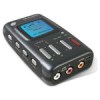 M-Audio Microtrack II Digital Audio Recorder – I have recently started recording the audio and video portions of my videos in separate takes. I get the video exactly right, and then simply play back the video while reading from my script. It adds surprisingly little extra work, as you can drag the .WAV or .MP3 from the Microtrack right into Camtasia. Lastly, if you are using video of yourself in your production, the audio quality from the Microtrack is going to be vastly superior to that from all but the most professional camcorders. If you don’t want to spend money on a separate recording device, the Open Source Audacity software does a great job of capturing audio, although you will have much better luck with an external microphone.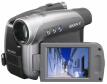
- Sony HandyCam MiniDV – Making video for the web means you don’t need anything flashy. Certainly nothing HD. Your average single CCD miniDV cam from 5 years ago will do a fine job adding your face to a web video. If you want to get really crazy, get a 3-CCD cam or a used Canon XL-1S. Since most of your takes are going to be short, the easiest method to capture the video is to stream it right into the computer using firewire or USB.
- Apple MacBook – It’s simple to use, comes with great video editing software (iMovie), and runs all of the
 applications that I need to create great videos.
 - Ample hydration – when you’re talking a lot, drinking water is key to not sounding like Patty and Selma when you’re reading your lines. And a beer or some scotch when work is done for the night is optional.
5. Get feedback – Doesn’t matter who it’s from, and in fact, the less technical the user, the better. Listen to feedback, and don’t be afraid to change something around and make a second (or third) version of the same video to address the feedback that you receive.
That’s it. And as always, practice makes perfect. Start by making a video about something that you’re an expert in, whatever that may be.
Compare my most recent video, below, to that 10 minute install video that I linked above. What a difference!

 Michael Diliberto